
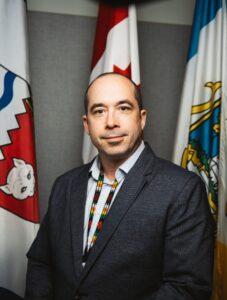
Rob Foote
Link to Their City of Yellowknife Election Biography/Information Candidate Page
Contact: rob@rob4council.com / (867) 447-0266
Yellowknife Chamber of Commerce - Councillor Candidate Questionnaire Reponses
Question 1 - Yellowknife is entering a significant economic transition as the NWT's diamond mining industry changes, with two mines now moving through closure while many of the major projects expected to create new economic opportunities are still several years from full construction. What should Yellowknife be doing now to navigate this transition and position the community for long-term economic success?
Yellowknife is facing a reality that is bigger than any one council or any one government. The transition in the diamond mining sector will create uncertainty, and we need to be honest about that. What Council can do is focus on creating the conditions that help local businesses, entrepreneurs, and investors succeed while advocating strongly to territorial and federal partners for the support our community needs.
For me, that starts with making Yellowknife a place where it's easier to do business, not harder. We should be looking for opportunities to reduce unnecessary red tape, improve the predictability of permitting processes, and support responsible development that creates jobs and keeps economic activity in our community. We also need to recognize that residents and businesses are already feeling pressure from rising costs, taxes, and fees. Economic development and affordability have to go hand in hand.If we're not careful, we can price families, workers, and employers out of the community we're trying to grow. I also believe we need to do a better job of keeping economic activity local. Every dollar spent with a local business circulates through the community multiple times through wages, services, and local purchasing.
While municipalities have limits on what they can legally require, Council can certainly look at ways to support local businesses through procurement practices, economic development initiatives, and by creating an environment where local companies can compete and grow.
At the same time, we need to think beyond mining. Mining will remain an important part of our economy, but we should also be supporting growth in tourism, Indigenous economic development, aviation, technology, professional services, arts and culture, and small business entrepreneurship.
Diversification doesn't happen overnight, but if we start building those opportunities now, we'll be in a stronger position in the years ahead. Ultimately, my role as a councillor would be to advocate, collaborate, and make practical decisions that improve Yellowknife's competitiveness. I can't promise that Council can eliminate the economic challenges ahead, but I can promise to support policies that encourage investment, protect affordability where possible, and help ensure that more of the economic benefits generated in the North stay in the North.
Question 2 - Crime and public safety concerns are also creating direct costs for Yellowknife businesses through theft, property damage and increased spending on security and other measures to protect their employees and property. As a member of City Council, how would you address the impact these issues are having on the business community?
Having experienced homelessness and addiction challenges earlier in my own life, I have a great deal of empathy for people who are genuinely struggling and need support. I know firsthand that recovery and stability are possible when people have access to the right help.
At the same time, I think it's important to be honest that businesses, residents, and visitors are experiencing real impacts from crime, vandalism, public disorder, and repeat offending. Too often, those conversations become polarized, as though we have to choose between supporting vulnerable people and supporting public safety. I don't believe that's true. We need to distinguish between people experiencing a legitimate crisis and individuals who repeatedly engage in criminal or disruptive behaviour while hiding behind the broader social issues conversation. Compassion and accountability are not mutually exclusive. We should continue advocating for effective mental health, addictions, housing, and outreach supports, but we should also be clear that businesses and residents have the right to feel safe and secure in their community.
As a councillor, I would focus on strengthening partnerships between the City, the GNWT, Indigenous governments, community organizations, businesses, and law enforcement. Many of the tools needed to address addiction, mental health, and homelessness sit outside municipal jurisdiction, but Council can be a strong advocate and convenor. We need practical solutions that reduce the number of people cycling through crisis while also responding to the immediate concerns of business owners who are absorbing the costs of theft, property damage, and increased security measures.
I also think we need to recognize the economic impact. When business owners are dealing with repeated vandalism, theft, and safety concerns, it affects decisions about expansion, investment, and whether people choose to locate downtown at all. A vibrant downtown depends on people feeling safe walking, shopping, dining, and doing business there. Supporting economic development and improving public safety are not separate goals; they're closely connected.
I can't promise that any single councillor can solve these complex challenges. What I can promise is that I will advocate for a balanced approach: one that treats vulnerable people with dignity and compassion, supports pathways to recovery and stability, and at the same time refuses to accept ongoing criminal behaviour as simply an unavoidable part of life in our community. Yellowknife can be both caring and accountable, and I believe residents and business owners deserve that.
Question 3 - Yellowknife needs more development to support housing, economic growth and the long-term needs of the community, but development can involve difficult trade-offs and face barriers that prevent projects from moving forward. As a member of City Council, how would you approach growth and development in Yellowknife?
Yellowknife needs growth if we want to address housing challenges, attract investment, create jobs, and maintain the services residents rely on. One of the realities we've faced for many years is that a limited supply of developable land has constrained our ability to grow.
While progress has been made in opening up new opportunities, we need to continue working with our territorial and federal partners to ensure there is sufficient land available for housing, commercial, and industrial development. If we want a more affordable and sustainable future, we need to make it possible for people and businesses to invest in Yellowknife.
At the same time, growth should be guided by fairness, transparency, and common sense. Developers need a process that is predictable and timely, while residents deserve meaningful consultation and confidence that decisions are being made in the community's best interests. I don't believe Council's role is to say yes to every proposal, but neither should we be creating unnecessary barriers that discourage investment and drive up costs. Good projects should be able to move forward efficiently, while legitimate concerns are addressed openly and honestly. I also think we need to recognize the connection between development and affordability. When housing supply can't keep pace with demand, residents feel it through higher home prices and rents. When commercial and industrial opportunities are limited, businesses face higher costs that are often passed on to consumers. Making it easier to responsibly develop housing and commercial space isn't just an economic issue; it's also part of addressing the cost-of-living pressures many families are experiencing today.
As a councillor, my role would be to support responsible growth that strengthens Yellowknife's economy while ensuring residents have a voice in the process. I will advocate for policies that expand opportunities for development, reduce unnecessary barriers, and encourage investment, but I will also expect developments to be compatible with their surroundings and responsive to community concerns. I don't think growth and community interests are competing priorities. When done well, development should create benefits for both current residents and future generations.
Question 4 - The major projects expected in the North will require a larger and more diverse workforce in the years ahead. How should Yellowknife prepare its residents and businesses to participate in and benefit from those opportunities?
Major projects in the North will create opportunities, but I think we need to be realistic about the role of municipal government. Workforce development, training, and major economic policy are largely led by industry, Indigenous governments, educational institutions, and the territorial and federal governments.
Our role is to make sure Yellowknife is prepared to support that growth and position itself to benefit from it. That starts with having the right foundations in place. We need adequate housing, serviced land for development, reliable infrastructure, and a regulatory environment that allows businesses to invest with confidence. If people are coming here to work and companies are looking to establish or expand operations, they need a community that is ready for that growth.
The decisions we make today will influence whether Yellowknife is seen as a place to invest tomorrow. We also need to be thoughtful about the long-term financial implications of growth. Opportunities to work with GoC agencies like DND, joint partnerships like NORAD, and other organizations can bring significant infrastructure investments into our community, and we should absolutely pursue them where they make sense.
However, I believe Council has a responsibility to look beyond the ribbon-cutting. Just because something is free or heavily subsidized to build doesn't mean it's free to own, operate, maintain, or eventually replace. Future councils and taxpayers will inherit those costs, and we need to ensure the long-term benefits justify the long-term obligations. Ultimately, I want Yellowknife to be in a position where residents and local businesses are well placed to benefit from future opportunities.
That means advocating for the infrastructure, housing, and business conditions that support growth while exercising sound financial stewardship on behalf of taxpayers. Growth is important, but it should be sustainable, affordable, and planned with future generations in mind, not just the next few years.